
I truly don’t think I’d have gone ahead with a career break if I didn’t book so many trips I essentially rendered myself unemployable for a good few months. And I kicked it off with Montenegro.
Rapidly – and unsurprisingly – growing in popularity among tourists, Montenegro is an adventure. For me, visiting the ‘Black Mountain’, as the country’s name directly translates, turned into a nomadic sort of a trip. We moved every couple of days. The suitcase was a mess but accommodation ranged from a picturesque vineyard by Lake Skadar to a cosy farm in the mountains of Durmitor. We added a solid 975km of mileage to the rental car, battering it on mountain serpentines, barely-there country lanes and busy coastal roads.
Montenegro is located in four climatic zones. Four. And so, during our nearly two-week trip there was snow (keeping us from going up Bobotov, Montenegro’s highest peak), rain (not keeping us from hiking the more accessible, still stunning mountains outside Kotor) and sun (calling for a couple of lazy afternoons by the Adriatic).
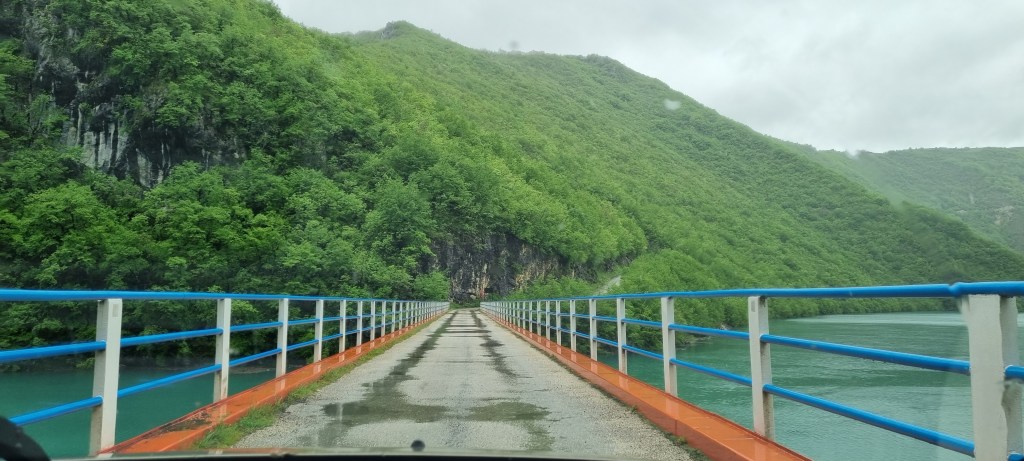
From mountains to canyons and lakes, the beauty in Montenegro brings the word ‘raw’ to mind. A lot of it felt pristine and untouched. Much of it, on the other hand, felt fragile against the developments currently underway as the country works to accommodate more tourists and reinvent itself.
“Come back in five years; it’ll be the new Monaco,” was the forecast from a local.
It’s a young country but it’s maturing fast.
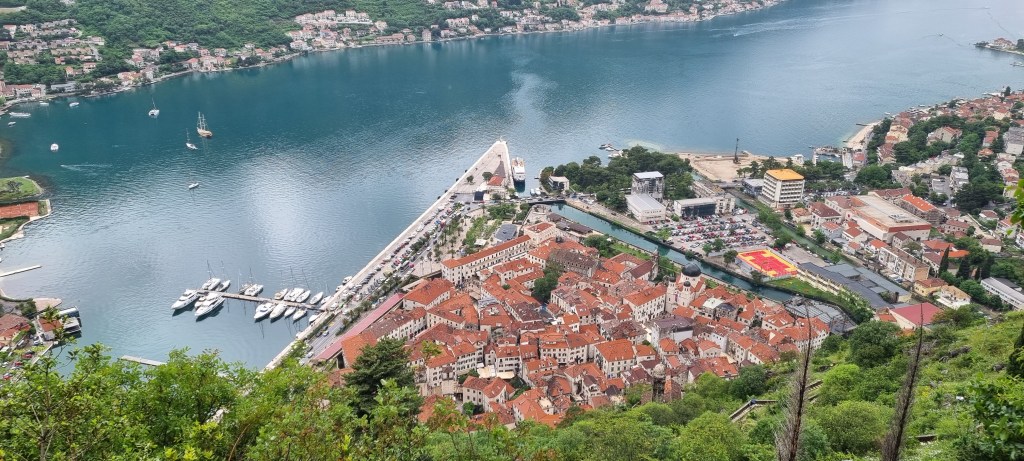
With absolutely no formal education to show for it, I find viticulture fascinating and whenever an opportunity to taste new wine presents itself, I’m not one to reject it. Which is why for the first couple of nights in Montenegro, I booked a stay in a vineyard.
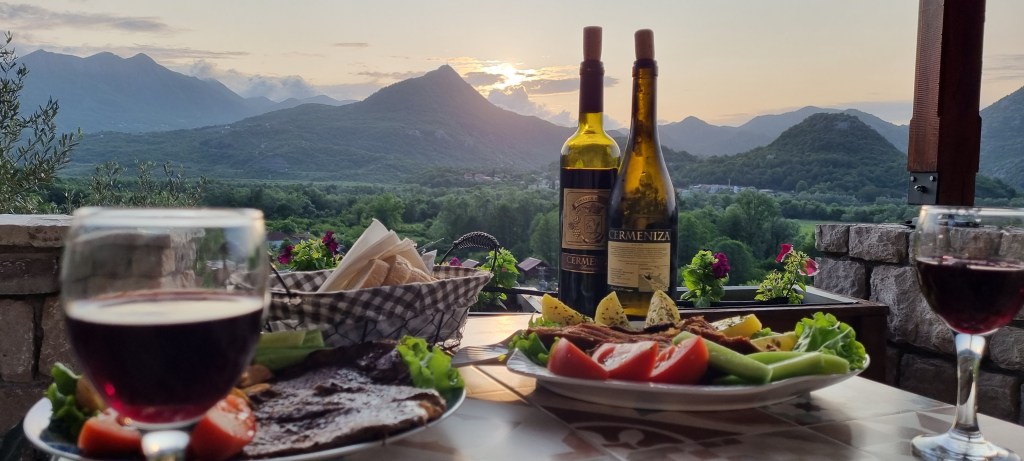
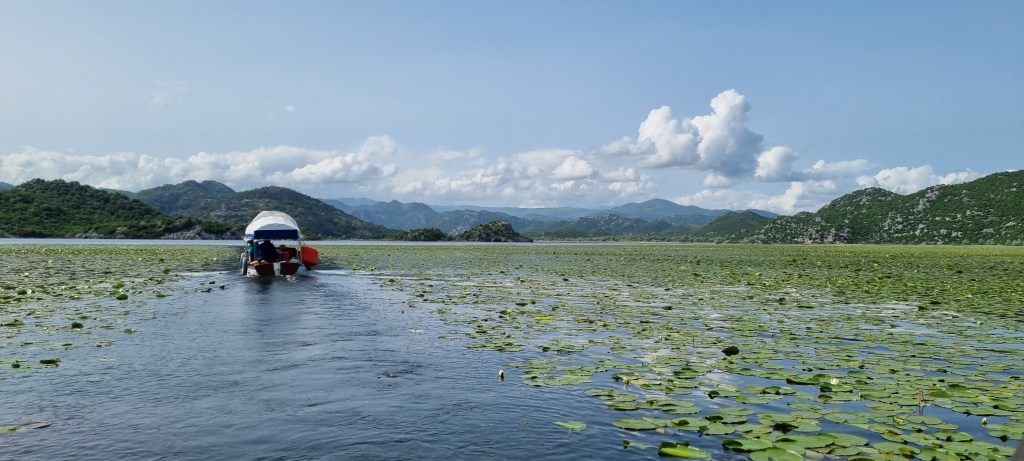
The casual culture of wine making in certain parts of Montenegro, not just in professional vineyards, but by just about anyone who has a few grapes knocking about, is enchanting. Our stay in a family-run vineyard by the Lake Skadar was the perfect excuse to taste everything the local grapes had to offer. White wine was nice but it was the red that captivated me with its cherry aftertaste. The following days brought us opportunities to also try wines made by locals at home as well as shop-bought ones from huge productions, and I don’t think we had a single bad bottle. My personal favourite was the rich, ripe cherry red made by a boat captain who took us for a tour on the lake. But perhaps the stunning surroundings had something to do with it…
As it often happens when you travel, a few things in Montenegro muddled my mind with a strong sense of déjà vu. And it took me right back to my childhood in Poland, in the years of the Soviet Union’s influence fading.
It happened through tangible elements of familiarity, first. I wasn’t surprised to find lots of food similar to what ate as a child, and I expected to be able to understand some of the language. The less obvious manifestations included the way shop windows were arranged in Podgorica. It’s hard to explain but there was this Eastern bloc feel to it. Ineffable, almost, and similar to what I can only describe in a less than elegant way: the vibe. The rough edges and a certain simplicity to things in Montenegro reminded me so much of the way things and people were when I was growing up. Nostalgic? A little.
I’d go back to Montenegro in a heartbeat. And I fully intend to find a non-snowy time to claim back my Bobotov hike.
 monika morgan